You only wake up when something has gone wrong. Today, your ship is a wreck on an unfamiliar world, your view beyond the hull is incomplete, and recovery is your responsibility. Again.
In Crash Bot, you are the ship's emergency intelligence. Build machines from useful hardware, give them behaviours through visual programming, and send them out to discover what survived the crash and what might get you off the ground. Start with working routines, adapt them to the situation, and develop an operation that can scout, recover, recharge and keep going when the plan needs changing.
Every improvement has a purpose. Better information helps you choose a route. Better hardware makes a difficult load manageable. Better instructions can bring a bot home with enough power to make another trip. Repair the systems needed to launch, then make the decision no program can make for you: is what remains out there worth staying for?
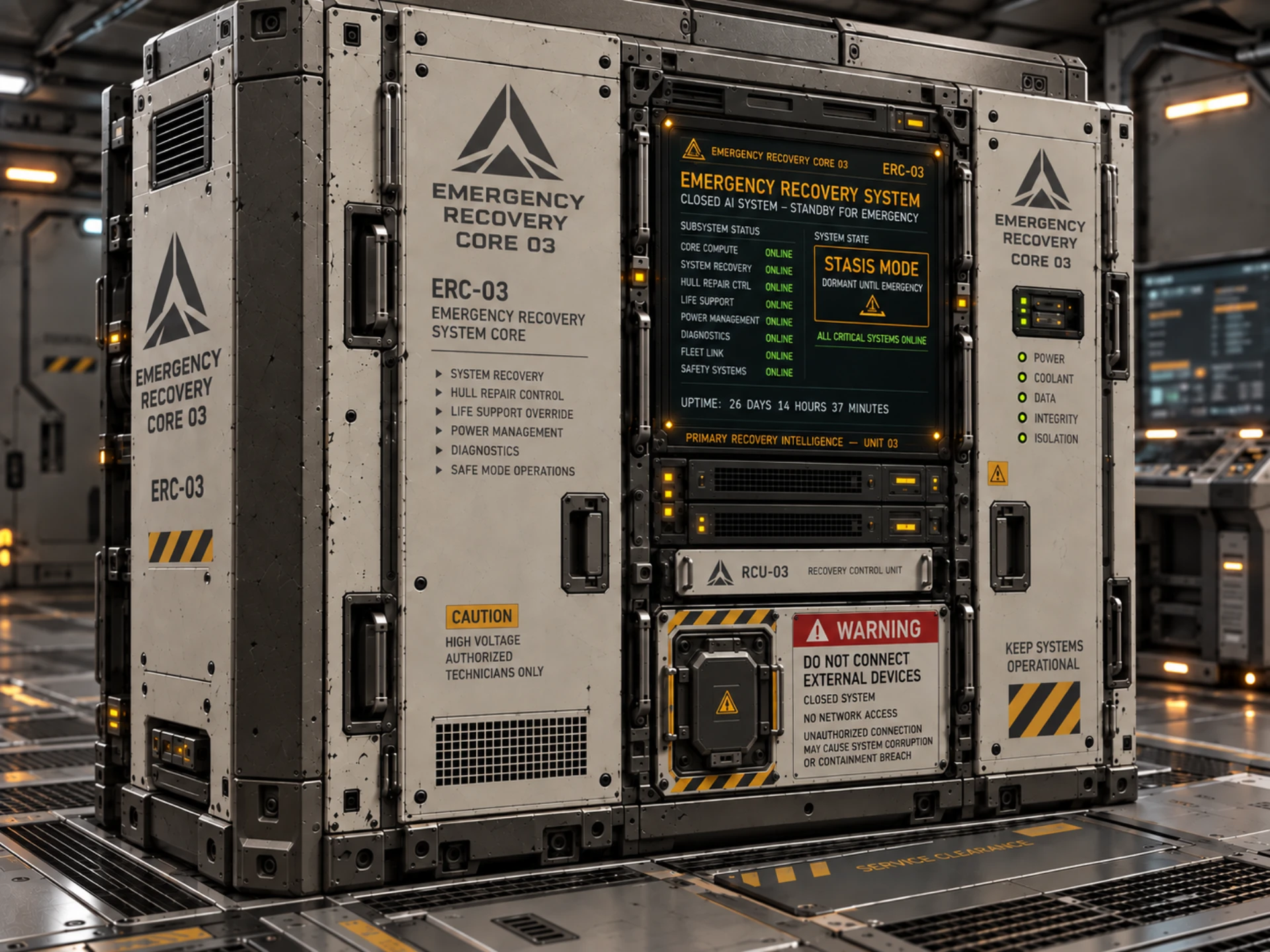
CONCEPT ART Supplied mainframe concept reference. Names, status readings and uptime shown are illustrative, not established story canon.
AN ILLUSTRATIVE RECOVERY
A better plan earns another possibility.
Fictional example of the intended experience, not a transcript of tested gameplay.
Your first machine leaves the ship with a simple job: find useful salvage and bring it back. Its first trip works. The second reaches farther. On the third, the load makes the return journey more demanding than your original plan allowed for.
You inspect what happened. The routine made sense for the easier trips; it needs to account for this one. You change the return condition and choose a route better suited to the loaded machine. On the next attempt, the bot comes home under its own power.
Now you have a routine worth reusing. A scout expands your view while another machine keeps recovery moving. The ship's launch blockers disappear one by one. What began as an emergency is starting to resemble a system.
Then a fresh observation reveals a valuable deposit. Reaching it would mean a longer trip, and conditions along the route are worsening. You have a working ship, a better program and a decision to make.
Leave with what you have—or trust the operation you built to manage one more recovery.
01 / THE INTENDED EXPERIENCE
Be the ship
You experience the crash site through a stranded recovery computer. Every machine you send out extends your reach, and every observation it brings back helps turn uncertainty into a usable picture of the world. Building a scout is also building a way to see.
02 / THE INTENDED EXPERIENCE
Build for the job
A machine's role comes from its equipment and instructions. Choose the mobility, sensors, power and tools that suit your plan. Experiment with specialists or a versatile all-rounder, and consider what those choices mean when the machine is carrying a load instead of travelling empty.
03 / VISUAL PROGRAMMING
Give your machines useful instincts
Tell a bot what to do when its battery runs low, when it finds a suitable resource, or when its next task cannot be completed. Begin with working visual routines and reusable modules. Combine and configure them, then open their logic when you want to make the behaviour your own.
04 / THE INTENDED EXPERIENCE
Watch your decisions become physical
Power, mass, grip and clearance matter. The program chooses what to attempt; the machine has to do the work. A better solution might be a stronger assembly, a different route, a lighter load or a smarter instruction. Understanding the problem is part of building the answer.
05 / THE INTENDED EXPERIENCE
Find out why it went wrong
An empty battery, missing tool and blocked route call for different responses. Follow what your machine was trying to do, inspect what stopped it, and change the part of the plan that matters. The intended pleasure is the moment an understandable failure becomes a solution you can reuse.
06 / THE INTENDED EXPERIENCE
Decide when enough is enough
Restoring launch capability lets you escape. Staying gives you another chance at valuable recovery, while conditions keep changing around you. Consider what is still deployed, what can realistically return and how much you are willing to risk for one more trip.
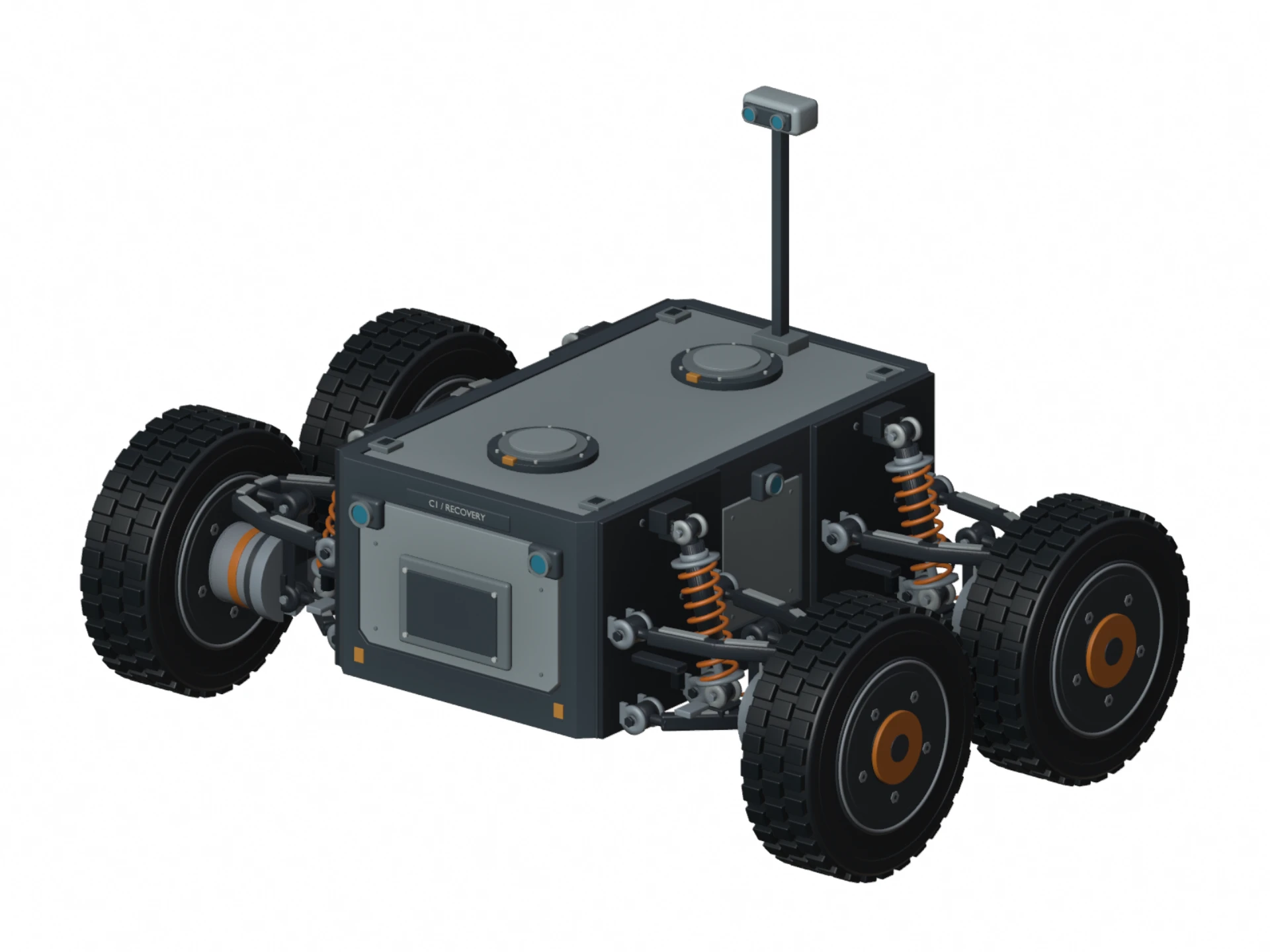
CONCEPT ART Approved model appearance; game integration and simulated capabilities are separate.
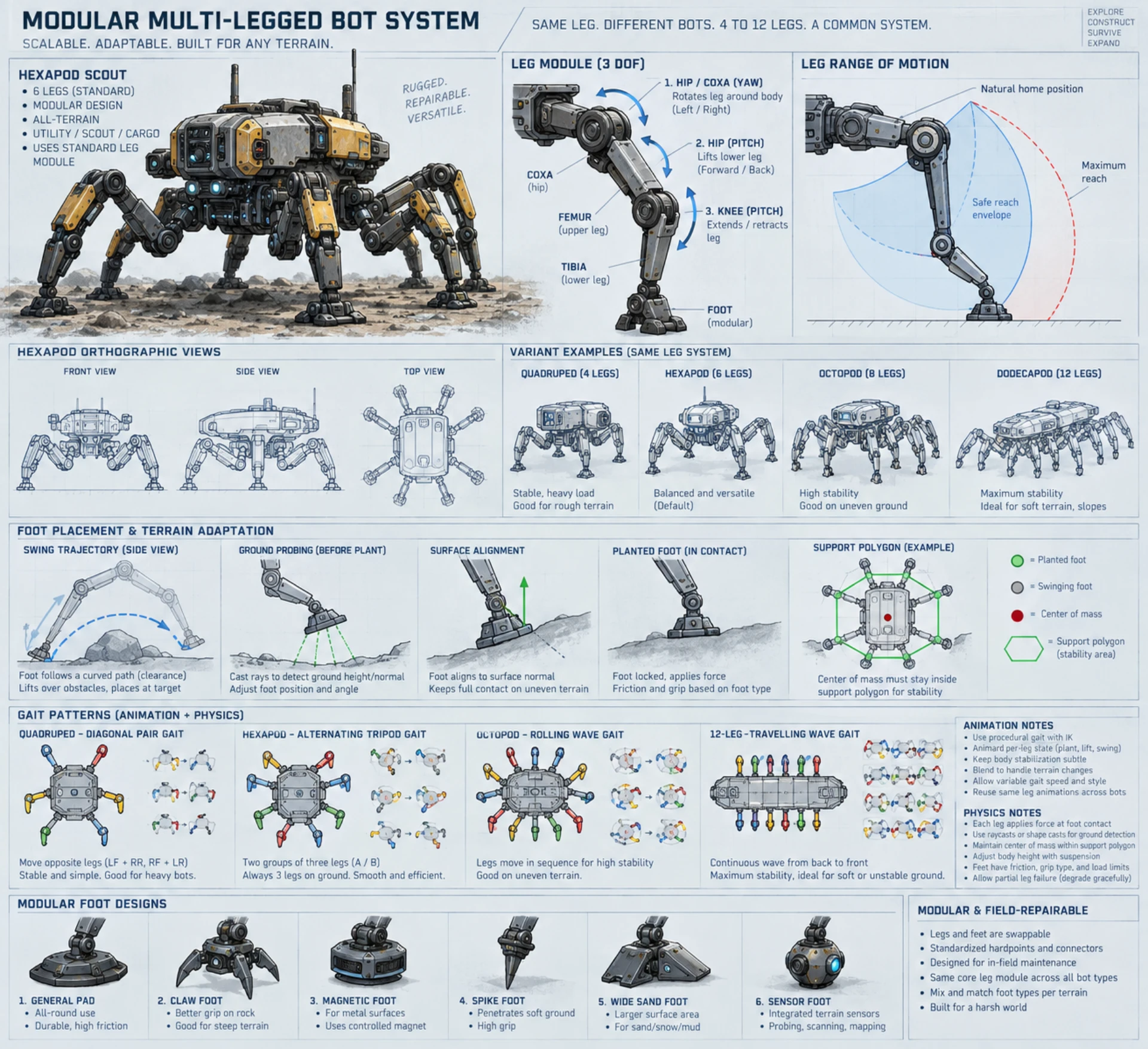
CONCEPT ART Design studies, not finished game assets. The illustrated twelve-leg variant is not a committed feature.
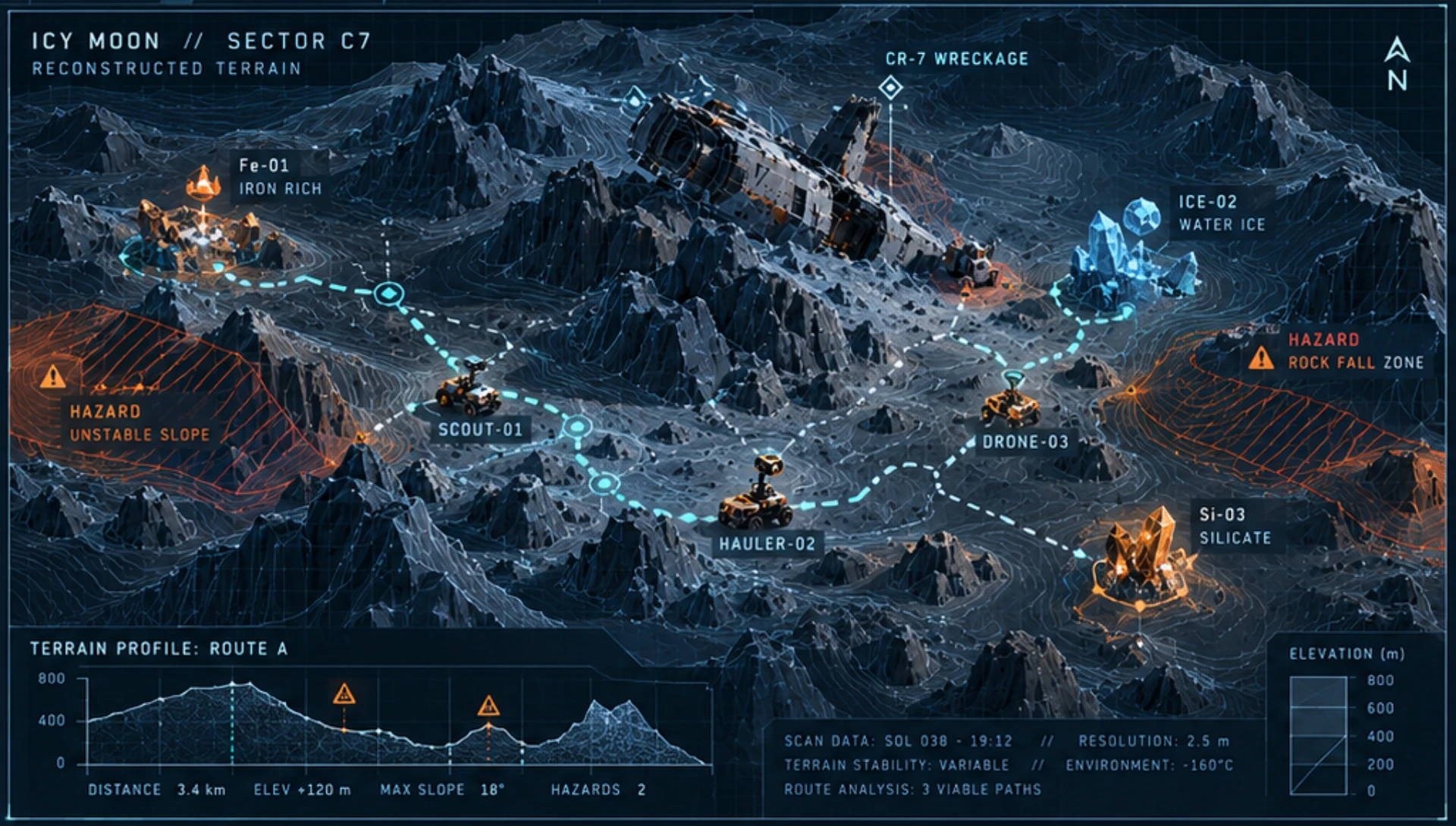
CONCEPT ART Intended reconstructed-world presentation. This is concept art, not proof of current gameplay.
BEFORE YOU BUILD
A few questions.
What do I actually do in Crash Bot?
You assess a crashed ship, build and program machines, explore through their sensors, and recover resources to restore launch capability. Along the way, you improve the behaviours that keep the operation working. When the ship can leave, you decide whether further recovery is worth the risk.
Do I need to know how to code?
The game is designed around visual programming without required typed code. Working starter routines and reusable modules provide a way in. You can configure and combine behaviours, then inspect and edit their underlying logic as you become more comfortable. The complete beginner workflow is a development goal and should be described accordingly until verified in the public build.
How much control do I have over a robot?
Programming its behaviour is central to play. You decide how it chooses work and responds to conditions, with deeper control through the visual logic supported by its equipment. A program must work within the machine's physical capabilities and available power.
Do I have to build a fleet?
The design supports different approaches, including specialised machines or one sufficiently capable machine handling several jobs. Choose what suits your plan and the equipment available; the objective is a successful recovery.
What makes each recovery different?
Different conditions change the engineering problem: what you know, what you can reach, what you can carry and how you can keep the operation running. Programs and builds need to suit the circumstances. Exact environment variety and procedural content should be described only when the public scope is confirmed.
Is repairing the ship the end of the mission?
Restoring launch capability gives you the option to leave. You can depart immediately or continue recovering valuable cargo while the risks develop. Becoming ready does not automatically launch the ship or secure everything still at the site.
What carries into another run?
The intended progression includes saved programs and eligible rewards secured by successful departure. Ordinary unused salvage and generic fabrication feedstock remain local to the run under the current design. The full upgrade catalogue and exact loss rules are still being developed.
What happens when a plan fails?
You examine the cause and choose a response: change the instructions, adapt the equipment or route, or organise recovery where possible. The design aims to make failures understandable so that trying again involves a useful change.
When can I play?
No public demo, release date, price or store page is announced in this preview. The game remains in development.
SAME SHIP. DIFFERENT DAY.
Start with a damaged ship and a few useful parts. Build a machine, give it a plan, and see what it can bring back. Improve the operation until escape is possible. Then decide whether you are ready to leave.